


Finnish company Planmed Oy dedicates its efforts to the development, manufacturing, and marketing of advanced imaging equipment that provides a unique combination of image quality and ease of use for medical imaging professionals.
The company offers products for mammography and orthopedic imaging that are known for their performance, ease of use, and ergonomics. Since 1987, Planmed systems have been providing tools to healthcare professionals in more than 80 countries worldwide.
The company is part of the Finnish Planmeca Group, a well-known company in the medical and dental field.
Planmed is committed to continuous improvement and development and strives to offer innovative solutions for all its customers' imaging needs in the future.
Products
Digital Mammography and Breast Tomosynthesis
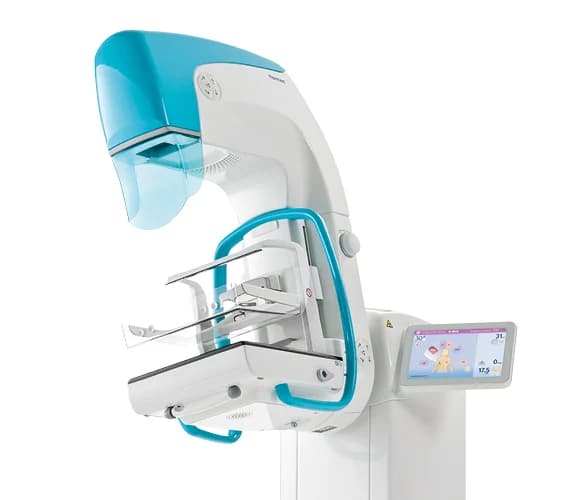
Planmed Clarity 3D
Planmed Clarity 3D is one of the most advanced and compact mammography systems on the market, offering exceptionally clear digital breast tomosynthesis and digital mammography images. The system features synthetic 2D imaging (Planmed S2D™) for easy comparison with previous examinations, lower radiation exposure, and reduced compression for improved patient comfort. It includes fully motorized functions, isocentric C-arm movements, and the intuitive Planmed Clarity Flow software with dual touchscreens for efficient workflow. It can be used for three-dimensional imaging, two-dimensional screening, diagnostic examinations, and stereotactic biopsies.
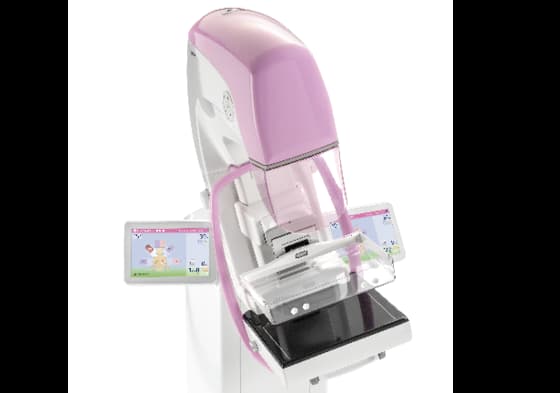
Planmed Clarity 2D
Planmed Clarity 2D is a comprehensive digital mammography system that offers exceptional image quality and ergonomics. The robust unit can be used for preventive screening, diagnostic examinations, and stereotactic biopsies. It features Planmed Clarity Manager and Planmed Clarity Flow software that provide a streamlined user experience with dual touchscreens and customizable workflow. Post-processing for contrast, sharpness, and brightness can be optimized for each radiologist's individual needs. It supports additional diagnostic examinations, magnification imaging, and biopsy procedures, and can be field-upgraded to digital breast tomosynthesis.
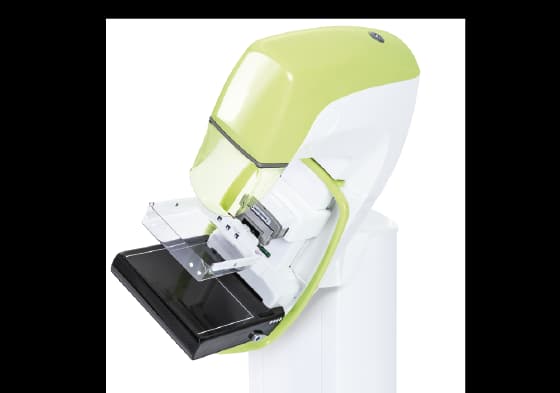
Planmed Clarity S
Planmed Clarity S is the ideal choice for a cost-effective digital mammography system that offers high performance and reliability. The unit can handle demanding workloads, from daily preventive screenings to follow-up studies and 2D biopsies. Thanks to its compact design, robust a-Si detector, and single-phase power supply, it adapts excellently to demanding conditions such as mobile installations. It features characteristics of the Planmed Clarity family such as OneTouch™ workflow, extensive handles, and curved chin guard for improved comfort for patients and staff. It includes Planmed Clarity Flow software for a smooth user experience.
Whole Body CT - CBCT Low Dose Imaging
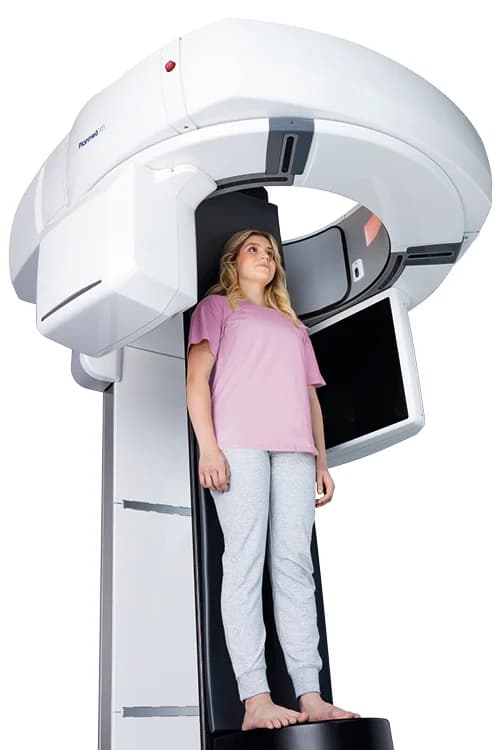
Planmed XFI
Planmed XFI® is a unique CBCT system that provides comprehensive whole-body imaging, from head to toe, in both weight-bearing (standing) and supine (lying) positions. With Planmed XFI, you can significantly enhance your orthopedic imaging capabilities.
More About Planmed XFI
Low Dose Imaging with Optimal Image Quality
As 3D imaging technology evolves, it is essential to balance the diagnostic benefits with the risks of radiation exposure, particularly for children who are more vulnerable.
3D imaging emphasizes the ALADA principle (As Low As Diagnostically Acceptable), which encourages minimizing radiation exposure while maintaining image quality.
The pioneering Planmeca Ultra Low Dose™ protocol successfully reduces the already low effective doses of the Planmed XFI® scanner for patients without compromising image quality. The unique imaging protocol is based on Planmeca's intelligent 3D algorithms.
Benefits of Weight-Bearing 3D Imaging
3D imaging using the patient's weight is vital for identifying musculoskeletal problems, especially in the lower back and pelvis, which are not apparent when the body is at rest. It enables surgeons to assess various key areas, such as spinal alignment, pelvic orientation, joint interactions, implant placement, and functional status.
Incorporating this imaging in preoperative assessments improves surgical decision-making, reduces the risk of complications, and enhances treatment outcomes. It overcomes the limitations of various projection methods and overlapping structures, providing a more accurate anatomical representation in a natural, functional position. This technology offers better information about joint space narrowing and other conditions that conventional methods may overlook.